Tuesday, May 22, 2012

Rainy Week at the Garden


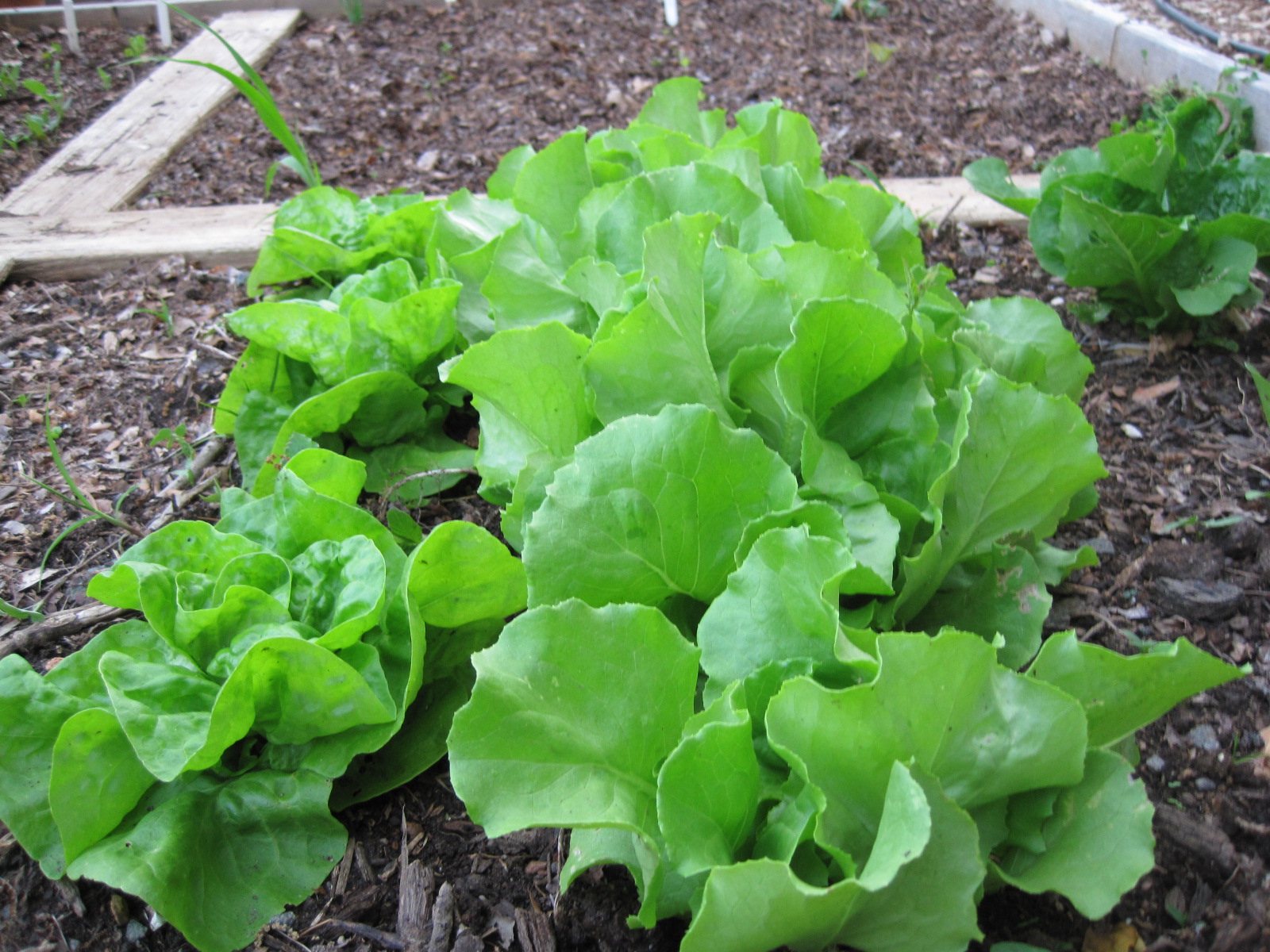
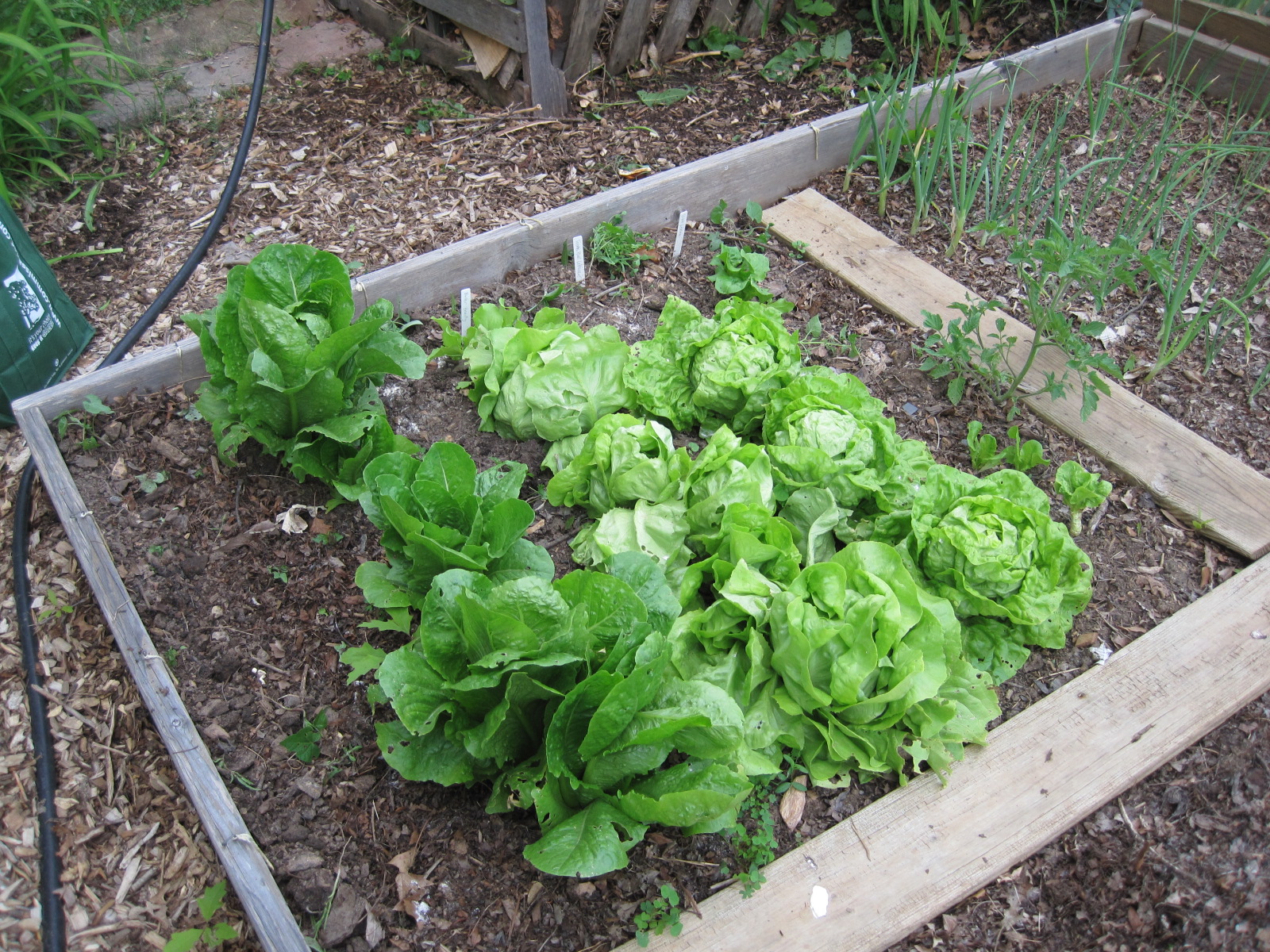
It is supposed to rain all week so I don't anticipate we will get the garden much. Here are some pictures of where we are so far. Some lettuce came in (as well as a volunteer tomato). Onions are starting to look ragged so the the thrip is likely starting up. Need to get the kaolin clay sprayed on soon (when the rain stops).

Radish shoulders are popping up and probably ready to be harvested. Rhubarb is going strong. Picked some to give to mom while she was visiting this weekend.


Chamomile is bursting out of its bed. Hubby deadheaded it this weekend, and I have a whole tray air drying right now for tea. Yum, yum!


Here are our semi-volunteer potatoes. I say semi because I planted them last year and they never did anything because our soil was still heavily clay at that point. After drastic enriching this spring these potato plants popped up right where I planted them last year. Hubby is hilling them with a box at the moment.


Volunteer sun-box mint is taking over. We plan to remove the box but then there will be a mint/chamomile death match. 


We have some beans that survived. Hubby put the floating row cover up this weekend to protect them from the evil Mexican Bean Beetle (my main garden nemesis). 


Our hydrangea survived! It has started to bud and then we had a hard freeze and it all turned black. But it looks like it is doing great now. 


First raspberries are coming in. They didn't make it home.


And our blackberry bushes are trying to escape the cage we put around them. It is now almost 7 feet tall. I feel like it wants to eat us. At least the blackberries are ripening.


Tuesday, May 15, 2012

Making Rhubarb-Apple Jam

Since our rhubarb plant is now 3 years old we are trying to make a concerted effort to actually use it. The first year we didn't take any since we read that you should let it focus on putting out strong roots by not picking any. We could have harvested a ton last year because it was plenty big, and we did take some, but not as much as we could have.

And so, we made jam. I have always wanted to make jam and now we have a reason. We used this recipe from allrecipes ( I say "we" but hubby actually did all the work). The process was very easy and only took the following:

3 cups of diced rhubarb
3 cups of peeled, diced apples (preferably organic)
2 cup of sugar (we used turbinado but you could use white)
1/2 cup of water (although we had extra rhubarb so we added a few more tbsps of water)
1 tbsp of cinnamon
1-2oz pkg of pectin

Cook the rhubarb, apples, sugar, cinnamon and water down for 20 or so minutes. Mash it with a potato masher if it still a bit lumpy. Then throw in the pectin, boil for 5 mins and you're done! We are going to put it in fridge and freezer, so we didn't process it in a water bath but you easily could.


I thought the expense of the pectin would make cooking your own jam somewhat cost prohibitive since it is about $4 a box but look how much this made! The jam itself turned out brown because our rhubarb is the Green Victoria type not the red. Luckily someone else posted about this on allrecipes, so we were prepared for it to be this less-than-appetizing color. Still tastes great...almost like a tangy apple butter. We will definitely make this again; although, this will hold us for a good long while.

Friday, May 4, 2012

Quick Garden Update

I've been a little remiss in posting but here is a quick update of the doings in our garden:

Our "Prime Jan" (supposedly bears on first year canes but doesn't) blackberries are finally starting to come in. They are ferociously dangerous. You can't see it well in the picture, but we caged it in last year to keep it from sticking us to death. Stupidly we planted two of these monsters about a foot apart. Now it has formed a cone of thorns, so we will probably only brave the outer edges in our berry picking. In retrospect we should have ordered a thornless variety. Hopefully they will taste good and be worth the pain.


Our raspberries are also starting to come in. We won't have as many as last year but I am okay with that. I am actually still a little raspberried out.


Our chamomile is so big now I need to start deadheading it, so I can make some tea! I do wish the flowers were bigger (as they are supposed to be in German chamomile) but it is awfully pretty....and so satisfying to see such a full plant so early in the season. 


Onions are looking beautiful. In the foreground you can see some grocery store green onions that were part of a package we bought and didn't use in time so we planted them in the garden. We have done this before and they almost always take root.


I think the row on the right is the Butter Beauty and the row on the left is the Burpee Bibb. The stray one in the right upper corner is my one romaine that germinated. :sigh:


Rhubarb is getting big. I keep kicking myself that we didn't move it to the center of the square when we had the chance but at least we can grow some radishes next to it before the leaves are too much bigger and crowd everything out. This fall it WILL be moved! In the meantime we are going to try our hand at making jam.


And some beets! I planted some with homemade seed tape that I learned how to make from that clever gardener Garden Betty (seeds glued to toilet paper at evenly spaced intervals) and we planted some the regular way. The seed tape ones actually germinated better and are so beautifully even!


And finally....drum roll....we have a kohlrabi!!!! Or at least what we think is a kohlrabi. We have never grown this before and we have never seen a seedling or weed like this before so it must be it! Ideally I would like the rest of the seeds I planted to germinate but I will take just the one if that is all I get.


 Oh, and the asparagus we thought we killed when we built our new bed, guess not. Nature finds a way. The one stalk growing between the bed and the walkway is already trying to put out a fern (that spindly thing off to the far left of the picture). The annoying thing is that while we have asparagus, we never have much asparagus. We had hundreds of asparagus seed pods on our fern two years ago and it takes two years to come up so where is it all?


Thursday, April 26, 2012

Poor start to the season

We have already had a few garden sacrifices this growing season. Most of our bean plants have been eaten by pill bugs. Sigh. This has never been an issue before, but we did a few things differently this year and we suspect that these changes are the culprit.

1.) We did not turn the soil. In our attempt to stave off the morning glory infestation we took the lasagna gardening approach and layered either compost or leaf mulch over our beds but didn't turn it into our soil. Bad idea. I don't think lasagna gardening is intended for clay soils. In our big bed, we have had the worst lettuce germination we have ever had. We have reseeded twice but still have only one row of lettuce thriving (pics below). I think the seeds can't get started in the compost/leaf mulch.

More concerning, in our bean bed where we did only compost and no leaf mulch pill bugs have eaten our bean seedlings. They have never bothered our plants before, and I think this is because we usually dig in copious amounts of leaf mulch which becomes pill bug food. This year they have nothing to munch on except our seedlings. Since they are only a nuisance in the bed with no leaf mulch, clearly using leaf mulch (and digging it in) makes a difference.


2.) We've watered...a lot. Historically we are horrible with watering. Horrible. So this year, trying to start the year off right, we've been watering a ton. Turns out we've just softened our bean seeds and made them easy for the pill bugs to chew on.

3.) We started earlier. We had an unseasonably warm winter which allowed us to start plants earlier. Good for lettuce but not good for beans which if planted in cold soil can rot before they germinate according to Carole Turner's Seed Sowing and Saving book (which I just learned after I checked this out of the library). Well damn. 


Happy highlights:

Chamomile is huge and gorgeous. We're planning to move the sun box to a better place in the garden (and eradicate the virginia creeper growing behind it...eek!). Since there is only some opportunistic mint in the sun box, when we remove the box we are going to extend the chamomile bed and make a big "tea" bed to include the mint. 


 Radishes and one mesclun have come up and one lettuce row looks great.


Also we have some rogue asparagus (which we thought we sacrificed to build this bed but I guess nature finds a way):

Wednesday, April 18, 2012

Seedling Update

All the seedlings from the cell pack are now in pots or yogurt cups. Herbs have turned out great. I sowed enough to transplant in the garden and to fill the pots on my window sills.  Sadly, a number of my tomatoes got a bit leggy, but given that I ended up with 18 plants it is not the end of the world if a few don't make it into the garden. However, the surprise this year have been the peppers and eggplant which I did not expect to have such strong germination (based on the last two years experience). Perhaps I will finally get a Beaver Dam pepper and my Rosa Bianca eggplants. I am also including some pics of my lemon balm and my Christmas cactus (which blooms anytime but Christmas). Didn't grow them from seed but they are just so pretty!


Sunday, April 8, 2012

Easter at the garden

We had a busy Easter at the garden. In the big square bed we re-sowed lettuce (since only one of our six types germinated with any vigor) and kohlrabi since our first batch of that also never popped up. We also put in the rest of the onions and sowed some of our radish mix (can't wait to see what kinds we get). This is our first year of planting onions for their own sake and not just as our anti-aphid protection so we will see how they turn out. Luckily we still have enough of the set left over to make an onion border in a couple of beds.


Hubby put in the PVC hoops for our row cover tunnel. In the tunnel bed we sowed green beans, wax beans, more kohlrabi, and cylindra and golden beets.


 We had to move some garlic chives out of the hoop bed before we sowed seeds, but I found a good sized pot for them. We have garlic chives all over so if they don't survive the transplant it's not the end of the world.


Hubby also put a permanent wood frame around my "tea bed" so that now it actually looks like a bed since before I just some pieces of wood laid on the ground and it looked more like debris. I was very happy to see that the chamomile is already putting out flowers but am still perplexed because the package of seeds these came from said they were German chamomile but all my herb books say this is Roman chamomile since the plant is more frond-like and the flowers are smaller. If anyone knows one way or the other, please leave me a comment since at this point I don't know who to believe. I guess it doesn't ultimately matter since I'll have tea either way :)


Wednesday, April 4, 2012

For the love of parsnips

My interest in parsnips was first peeked by Joan Dye Gussow's book, This Organic Life: Confessions of a Suburban Homesteader. She described them as "spicy, aromatic, and delicious" and talked about how wonderful they taste when sauteed in butter and oil. After such a description I had to grow some and try them out.  The product of that first gardening attempt, chronicled in my first blog post, was the catalyst to start this blog. Even though they are notoriously hard to propagate due to spotty germination and can turn woody if you don't harvest them at the right time, they are absolutely worth the effort.


A little about the parsnip:
The parsnip (pastinaca L.) is part of the Apiaceae family which includes carrots and celery. Essentially the body of a parsnip is a root that looks like a slightly thicker white-yellow carrot, but that is where the similarities end.  The foliage is deep green, similar in size and shape to flat-leaf parsley. And unlike carrots, parsnips have a slightly tangy spicy taste. They are much loved in the UK but not as familiar to American eaters. The most common varieties grown by gardeners are the Hollow Crown which tends to be very long and the Harris type which is a bit shorter and quicker growing. Parsnips are said to prefer sandy, loamy soil since clay soils are known to be rough on root vegetables, causing forking. Also it is believed that size makes a difference, smaller parsnips thought to be better tasting. 

Propagation:
Traditional advice has been to sow them in the summer and harvest in the late fall after at least a frost or two has hit them and made them sweeter. They can also overwinter in the garden (just throw some soil on top of them) and supposedly the stored starch in them will change to sugar in early spring as the plant gets ready to grow out new greenery. Ideally if you harvest them early enough in this process they will still taste especially tender and sweet. The down side is that once the roots put out new greenery they supposedly lose much of their flavor and start to become woody. Also, the general garden wisdom is that parsnip seeds, which are  round, flat, papery thin and brown to tan in color, need to be absolutely fresh in order to get decent germination. 


Cooking and Nutrition:
Parsnips can be boiled, fried, baked into bread but my favorite method of cooking is to saute them with honey and olive oil or to add them to stew. Joan Gussow even describes eating slices of them with maple syrup like a pancake! They are high in vitamin C, potassium, magnesium, folate and have approx 6 gms of fiber (in a 9" root) according to Nutrition Data website. Here is one of my favorite parsnip recipes (I also throw in some cinnamon).
Parsnip Rash:
Picking parsnips and handling the greens while in sunlight is linked in some instances to cause a skin condition called phytophotodermatitis (some times called Parsnip Rash). This causes blistering skin lesion, but this does not seem to affect all people and seems mainly to affect agricultural workers picking a great quantity of parsnips at one time and in sunny conditions. While this doesn't constitute medical advice, it seems prudent to wear gloves when picking parsnips in full sun (particularly if you feel you might be sensitive). I can tell you have I am allergic to everything in the garden, and I have never had an issue picking the stray parsnip. For more information check out this article from the Journal of Accidental and Emergency Medicine. The Australian Centre for Farmer Health also has some helpful hints.


Our experiences so far: 
We are still trying to crack the code for our own zone and soil as to when to sow and when to harvest to get only tender parsnips but we have had no problems getting seed to germinate and we have had no serious forking despite our heavy clay soil. Based on our own experience, size doesn't matter (see pics and captions below). The mega parsnip we harvested in early spring a while back was amazing despite being gargantuan. It had been threw a horrible winter and hadn't yet grown a new top so perhaps this was why it was so tender despite its size. We have since harvested some that were smaller but that didn't experience a frost. These tasted woody and awful. We also just harvested one that overwintered in the garden but had grown all new greenery, and it was just beginning to be fibrous.
Ultimately you have to figure out what works for you but if you have any tips for growing tender ones feel free to share.  We have used the same packet of seeds for the past few years with no problem (stored in a miracle whip container in the fridge) but when they run out I am going to give the Harris variety a try. Our hollow crowns grow such long roots that we often end up breaking off the very bottom just to get it out of the ground. You can see in the last picture how long they grow. 

Over wintered, picked before much foliage regrew. Tasted terrific.
Started in summer and picked before a frost. Very fibrous and woody.
Overwintered, picked in spring but after new foliage came. Part tender and part fibrous.