Thursday, September 27, 2012

Our Seed Collection - 2012

Here is what is in our seed collection right now (or as Garden Betty calls it, our seed vault). Since I'm already shopping for next year I thought I should know what I already have without having to trot all the seeds out periodically. We store our seeds in old peanut butter jars or a ziploc and keep it in a crisper drawer in our fridge. The * indicates the seeds we start indoors. The bolding are the seeds we got mid-season that we will try in 2013.

Beans:
Bean, Brittle Wax (Bush Wax) -OP- Burpee -52 days  (1 1/2 pkgs)
Bean, Burpee's Stringless Green Pod- F1 - Burpee- 50days (Bush habit)
Bean, Climbing French - SSE -OP-65-75 days (pole habit)
Brassicas:           
Brussels Sprouts- Baker Creek-OP 
Kohlrabi, Early White Vienna – Baker Creek - OP
Choko Baby Pakchoi – John Scheepers – 45 – 55 days
Climbers (Peas and Cukes):
Pea, Shelling (Burpeeana Early)-Burpee - 63 days
Pea, Super Sugar Snap (edible podded) - Burpee – 64 days
Cucumber, Burpless Beauty – Burpee – F1- 60 days
Cucumber, Bush Champion - Burpee - F1 - 55 days 58-65 days
Cucumber, Japanese Climbing- SSE -OP
Gourds and Squash/Pumpkins:
Winter Squash, Early Butternut (bush habit) – John Scheepers – 82 days
Potimarron - SSE -85-95 days (saw this in Germany and loved it. SSE is the only place I know of that sells it)
Pumpkin, Early Sweet Sugar Pie--Burpee 90 days
Herbs:
*Basil, Greek - Burpee Fordhook Collection                        
*Basil, Lime- Burpee Fordhook Collection            
*Basil, Genovese – Baker Creek
*Basil, Sweet - Burpee
*Bee Balm, Lemon – Baker Creek            
Chamomile, Organic German ( but actually roman)-Garden's Alive-OP- Perennial
Chamomile, Bodegold – John Scheepers - Perennial
Chamomile, Organic German - Garden's Alive
Chervil, Curled -Burpee Fordhook Collection  
Chives, Common- Burpee-Perennial
Chives, Common - American Seed
Chives, Common - Burpee Signature 
Chives, Garlic - Burpee                   
*Cilantro, Slo-bolt – Baker Creek
Cilantro, American Seed            
Lavender, True - Burpee
*Majoram - Ferry Morse             
*Oregano – Burpee
Parsley, Single Italian Plain Leafed - Burpee
*Sage, Broad Leaf -Jiffy Smart Start
*Tarragon  -Ferry Morse
*Thyme, Common -  Burpee   
Nightshade:
*Cherry Tomato, Blondkopfchen-SSE-OP- 75-80 days (yellow)
*Cherry Tomato, Black Cherry- Baker Creek – OP (black/purple)
*Cherry Tomato, Riesentraube- Baker Creek -OP (red)
*Cherry Tomato, Super Sweet 100 –Burpee- F1-70 days (red)
*Tomato, Cherokee Purple – Baker Creek – OP (black/purple)
*Tomato, Costoluto Genovese- Baker Creek-OP (red)
*Tomato, Green Zebra-Baker Creek - OP    (green)
*Tomato, Orange Fleshed Purple Smudge- Baker Creek – OP -(multi)
*Tomato, Thessaloniki- Baker Creek-OP-60-80 days (red)
*Eggplant, Rossa Bianca – SSE – OP -80 days
*Pepper, Beaver Dam – SSE – OP-80 days from transplant (mildly hot)
*Pepper, Black Hungarian – SSE – OP 70-80 days from transplant (medium hot)
*Pepper, Garden Sunshine – SSE – OP-80-100 days from transplant (sweet)
*Pepper, Red Mini Bell- Baker Creek (sweet)
 Onions:
Onion, Nebuka Bunching- Plantation- 60-65 days
Onion, Yellow Granex - John Scheepers - 150 days
Evergreen Long White Bunching Onions -Burpee- Perennial
Leek, American Flag--Ferry Morse
Shallots, Ambition – John Scheepers--100 days
Root Vegetables:
Beets, Burpee Golden – SSE – 55-60 days
Beets, Cylindra - Burpee - 60 days
Carrot, Nantes Half Long - Burpee - 70 days
Carrot, Short n' Sweet Chantenay - Burpee - 68 days
Parsnip, Hollow Crown- Burpee – OP- 105 days
Radish, French Breakfast – SSE – OP – 30 days       
Radish, Asian Watermelon - Burpee - 35 days
Radish, Gourmet Rainbow Mix (Flamboyant French Breakfast (red/white long taper), Fuego (red round), Hailstone (white round), Helios Yellow (round), Pink Celebration (round), Plum Purple (round), Roodkapje (red/white round) and White Icicle (long taper)  - John Scheeper- 23-30 days 
Turnip, Purple Top White Globe – SSE -  45-65 days
Turnip, Golden Globe - Baker Creek  
Salad:
Lettuce, Butter Beauty (butterhead) - Burpee - 75 days
Lettuce, Burpee Bib (butterhead)- Burpee 75 days
Lettuce, Parris Island Romaine – Ferry Morse – OP-68 days
Lettuce, Simpson Elite (looseleaf) –Burpee –OP- 48 days
Lettuce, Tennis Ball (butterhead)- SSE
Lettuce Mix, Lovely Lettuce Mesclun Blend (Little Gem Baby Romaine, Curly Tango, Cheeky Red Lolla Rossa, Crispy Summertime, Brunia red oakleaf, Buttery Rouge Grenobloise and Merveille des Quatre Saisons) - John Scheepers - OP-30-40 days
Mustard Greens – Baker Creek
Japanese Giant Red Mustard Greens - Baker Creek 
Flowers:
Echineacea, Majestic Coneflower Mixture- John Scheepers- Perennial
Bells of Ireland -Burpee
Love in a Mist - Baker Creek (2pkgs)
Lupine, Russells Hybrid Mix - Burpee
Sunflower, Tiger Eye Mix - Baker Creek

Wednesday, September 26, 2012

Garden Nemeses: The Weeds

Here are some pictures of the plants that make gardening life difficult for us. We consider them weeds, but we realize that what is and isn't a weed is in the eye of the beholder.


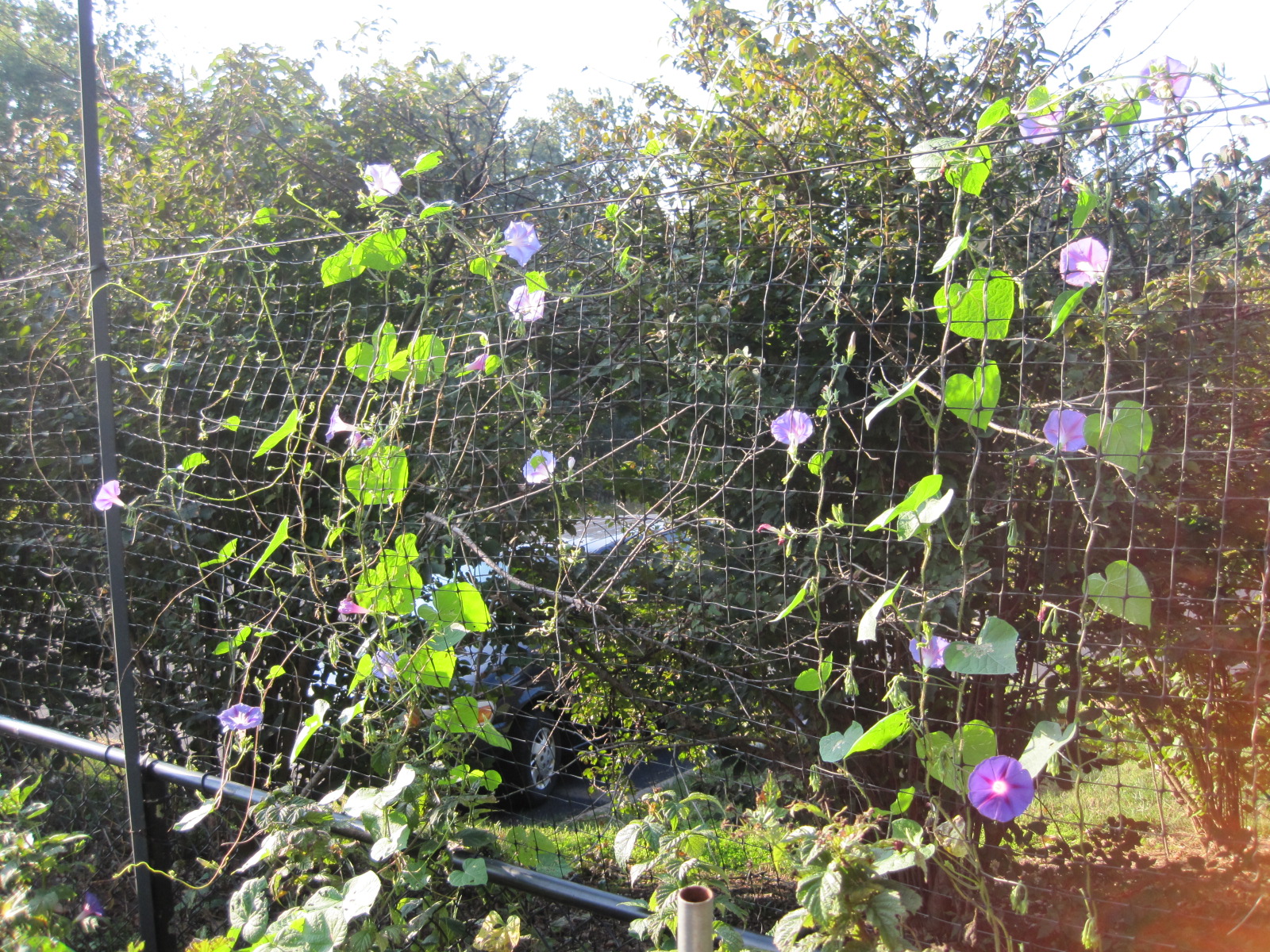
The Morning Glory
This is the most invasive weed we have in the community garden. The seeds are spread so thoroughly that we will never eradicate it fully. It grows around our plants, choking them off like a boa constrictor and worst of all, it takes over the deer fence if unchecked. Once we went on vacation for two weeks in July and when we came back our entire plot was a tangle of vines and purple flowers. To make matters worse my husband and I are both allergic to it. Needless to say, the thought that anyone ever grows this on purpose horrifies me.


 Here is a morning glory seedling (the heart shaped one in the center):


This is what greeted us when we got back from vacation in 2010. Keep in mind we were gone 2 weeks and the plot was semi-weeded before we left. but we hadn't dealt with the morning glories. As you can see they launched their assault from the fence. Needless to say we no longer go on vacation during garden season.


Horseradish
This is another gem that we inherited in our plot. The main problem with the horseradish is that it is so persistent. You have to dig down at least a foot to get rid of it because it is a parsnip shaped root; just ripping off the greenery doesn't kill it. Somehow it seems to know this and the errant seeds that do the best grow in the inaccessible area between our fence and our neighbors, in the empty spaces in the pallet that makes up the walls of our compost bin, and in the corners of our beds--all of which are extremely difficult to dig out. I have dug the one below out at least 3 times in the last 3 years. But if even one tiny root piece remains, it grows back. It is also frost resistant. At least this one we could eat if we wanted.


Mint
We are in a bit of a detente with the mint at the moment. When we got our plot, this was growing along each fence line and since it spreads through rhizome, it is basically unkillable. (Yet if I try and dig up some to put in a pot at home it dies...oh irony). This year we noticed our largest patch of mint decided to move away from the fence and colonize our sun box and this is where it stayed the whole season until it finally got completely cooked in the August sun. We never opened up the window since we weren't really trying to help it out so I'm sure there were days it was 110+ degrees in the box. Luckily we realized we didn't really need the sun box for growing since we have our low tunnels now and we are fine to use this as our mint containment system from now on.  Of all of our weeds this one bothers me the least. It smells beautiful when we rip it up, it doesn't bother the other plants, and we do use it for tea.


Virginia Creeper
This is the most insidious of our weeds because if causes the same types of blisters and rash as poison ivy if you are allergic to poison ivy (which of course we both are). It grows everywhere in norther Virginia including on fences, houses, trees and it turns a lovely red in the fall which is why people like it and treat it as an ornamental. It is coming from outside the trees outside our plot, snaking its way in the space between ours and our neighbor's makeshift fence and growing along the back of the sun box. I tried to kill it last year and am still scarred for my efforts so this time we are waiting til winter to try to eradicate it. I am no fan of round-up and we never use it in the garden but we may trot it out to finally end this.


The Fennel
I'm hesitant to say this, but I think we may have conquered our initial nemesis: fennel herb. Just like Florence fennel but without the bulb part, the top part looks like dill with feathery fronds. It grows a root underground that can be as long as your forearm and weigh up to 5 lbs, and it has to be fully dug out to eradicate it. 
Our ENTIRE plot was covered in them (all the stick looking things in the picture). Before we could do anything in our plot we had to dig out every last one. As you can see from the picture below of what our plot looked like when we first got it, the previous owner had tried to smother it with weed block. This had no effect whatsoever. Long after we dug it all out little fennel sprouts would pop up everywhere each year. They look like little carrot tops when they are seedlings. This is the first year that we haven't had more than one or two pop up in our beds so maybe we finally won. Maybe.

Saturday, September 22, 2012

September Peppers and Tomatoes

This year we had planned to forget pepper altogether. The last few years they have only done so-so in our garden and some didn't germinate for us at all. At the last minute I thought, what the heck, and sowed some of the most stubborn seeds when I started the tomatoes indoors. Of course they all germinated and it turned out to be a banner year for peppers. Most exciting of all were finally getting a few Beaver Dam peppers after 2 years of NO germination whatsoever. Now it is September and our peppers are finally coming in and our tomatoes are still going. 
 
 Here are a bunch of Garden Sunshine Peppers. 


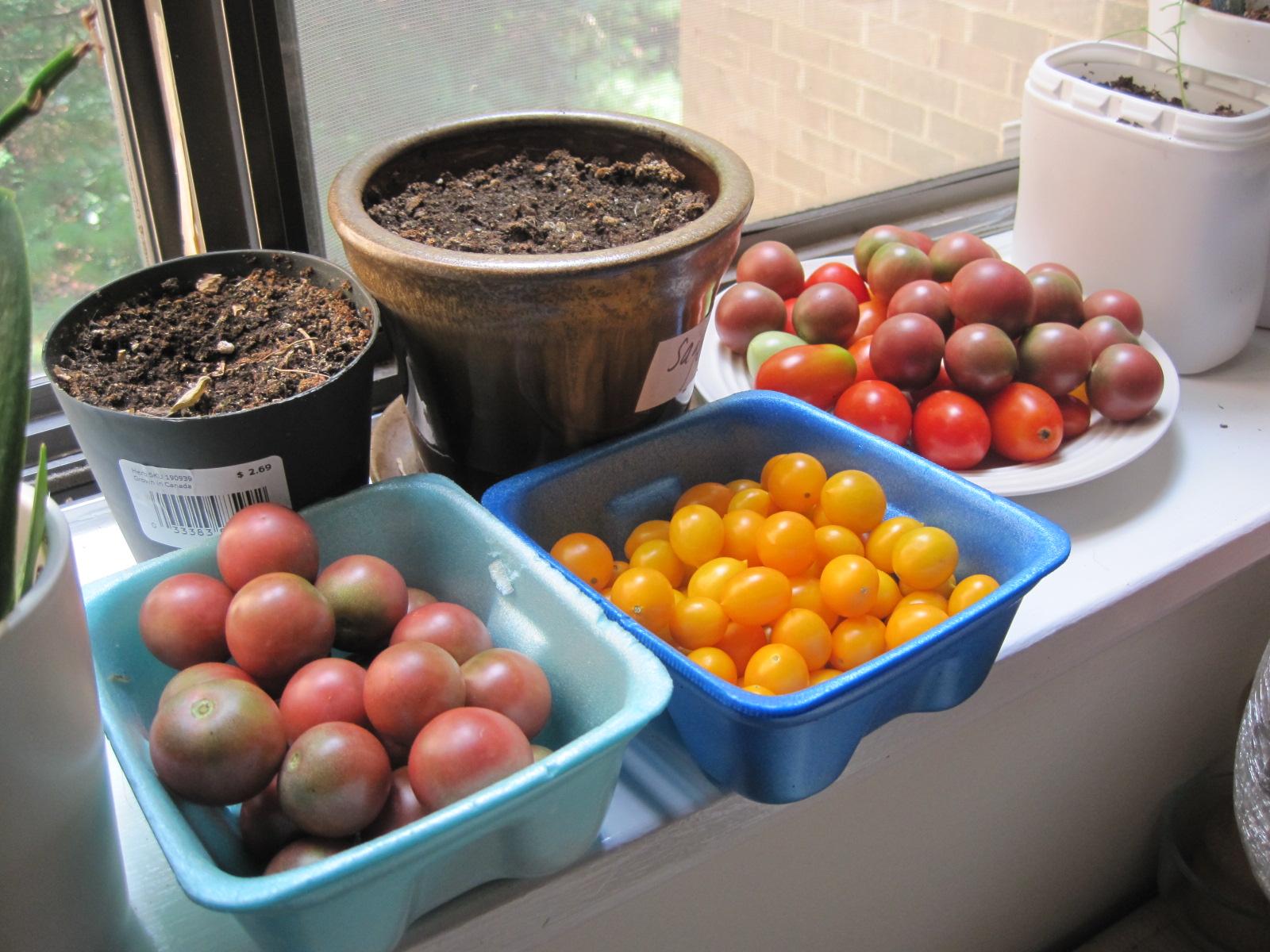
  Assorted cherry tomatoes. Aren't they pretty?

 Tomato plants still going strong. The Cherokee Purples failed this year (sad face) and our Blondkofpchen crapped out early because of the heat, but our smudges are still going strong along with the Black Cherries.

 Some more Black Cherries. This thing is PROLIFIC. Will definitely be planting next year.
 

 Here is our accidental pepper bed. It has definitely benefited from the overflow from our neighbors elaborate drip irrigation system that you can see in the top of the picture. We haven't watered much at all in the last month but they are still going strong.


 Here is my garden diva...the Beaver Dam from Seed Saver's Exchange. We still have quite a number of these on the plants.  I was so excited when I realized they germinated that I started squealing, "It's a Beaver Dam....a Beaver Dam!!" so of course now my hubby does this every time we bring some home.

 Here are some Garden Sunshines turning that lovely orange.Still have lots of these too.


 And here is an Orange Fleshed Purple Smudge that actually looks like the picture. Most of them seem to only have the purple when they are still green and then just turn totally orange. Of course I had to have a little hitchhiker peek out right when I took the pic. :sigh: We probably will plant these again next year because they are a great theft deterrent tomato...if you aren't in the know that they are supposed to look like this they just look diseased or not ripe yet.


What a lovely sight!


Wednesday, September 19, 2012

Eternal Gardening Optimism: A review of "The $64 Tomato"


As this year's gardening season begins to close I find myself taking stock of what worked, what didn't and what I want to try/change/do next year. This happens at the end of each season but the one noticeable characteristic of this yearly assessment is how quickly I focus on all the ways the garden will be *better* next year. My mind has almost tunnel vision, immediately forgetting the garden dramas of this season and instead imagining the garden of next year which of course will have no pests, no blights, perfect germination, amazing yields, and enjoy wonderful weather all season. We have been gardening for a few years now so of course we know this is not possible and yet, I spend most of the fall and winter of each year in this magical mind place. I never really thought about this little yearly leap from reality until I read the book "The $64 Tomato: How One Man Nearly Lost His Sanity, Spent a Fortune, and Endured an Existential Crisis in the Quest for the Perfect Garden" by William Alexander. 

I read this a while back and enjoyed it so much I had hubby read it too. The quick synopsis is that he and his family move to the Hudson Valley in NY and are able to build a garden, which he does on a mammoth scale which overwhelms him as the years go on. He chronicles his adventures some of which are laugh out loud funny and some that give him very amusing insights including why reel lawn mowers aren't worth the trouble (quotable observation "I bought this mower so you won't have to"); why you probably won't win against the critters eating your garden produce (quotable observation "you may be smarter, but they have more time"); why gardeners can't vacation in the summer; and one of my favorites, when he realizes that he created his own ultimate garden nemesis by accidentally encouraging an accelerated natural selection process of woodchucks on his property that weeded out all the dumb ones leaving only a very savvy "super chuck" who could get through the strongest electric fence to feast on his heirloom tomatoes. But his greatest insight will likely resonate with gardeners everywhere: he observes that most gardeners are filled with an overwhelming optimism each year that trumps whatever bad experiences they've had in their garden previously. Simply put, gardeners favor "optimism over experience." 

This struck a chord with me because I am the queen of this. Here are some of the flights from reality that I have been on at the end of seasons past: So what that the Mexican Bean Beetle ate all our beans this year; it can't happen two years in a row, right? (the reality check: of course it can!). Who cares that most of our heirloom tomato plants got burned from the extreme sun and heat this year; next year the weather will be perfect! (the reality check: it will likely be just like this year). What does it matter that we have not yet been successful growing cucumbers in the garden? Next year we will try a different trellis system/place in the garden/watering amount, etc and it will finally work. I could go on but you get the idea and if you love gardening you probably do this to. This used to drive my hubby crazy but thanks to this book, now he just chuckles at me and says "I know, I know...optimism over experience."

If the definition of insanity is doing the same thing over and over and expecting different results, then aren't all gardeners insane? No because we do try different things to fix the problems we've encountered. But as Mr. Alexander points out, for some reason we just forget all the bad stuff, or rather, don't forget it but give it less weight in our minds and instead seem to focus only on all the ways that our garden will be better next year. Given how much effort it takes to keep a garden going, especially an organic one where everything is grown from seed in a community garden that is hyper pest infested, this is probably what gives us (me and hubby) the mental energy to do this year after year. It is a little mental sabbatical that gets us ready to throw all our physical energy into the endeavor one more time. 

This matters this year especially because for me, this was a very frustrating gardening year. I was hugely pregnant and then had a newborn for most of the gardening season and had to leave all actual garden work to my husband, living vicariously through him. Sure I contributed a little, making seed tape, planting lists & diagrams, and diagnosing plant problems via cell phone pictures but it's just not the same thing. This experience could have put me off the whole gardening thing altogether. But remarkably, all that is already forgotten and my mind is already in that dream garden....of next year. 

Definitely read "The $64 Tomato" if you get a chance because it is definitely one of the best gardening narrative books I've read in a while.  

I should add as a disclaimer that some people found parts of this book offensive from an animal rights point of view because of how he deals with deer, opossums, woodchucks and other critters invading his garden (based on a quick skim through amazon reviews). I'm not going to judge him because I haven't gardened where he has and for people who are able to never use a pesticide and can live in harmony with their unwanted visitors, good on you. But some of us are in absolute wars in our gardens and sometimes extreme measures can be necessary if you want to feed yourself. Not saying I condone all the stuff he does in the book (re: opossum), but it happens.

Friday, August 24, 2012

Single Stemming Tomatoes: Does it work?

 Since out tomato plants are winding down I thought I would do a review of  the new approach we tried with them this year. Instead of cages, we grew them on a trellis and we "single-stemmed" them.

What the heck is single-stemming?

Single-Stemming requires you to pinch off the suckers (those extra tomato stems that grow in the notch between the stem and branch of the plant) so that the tomato grows mainly on one stem with only main branches. This allows the plant to focus on setting fruit instead of growing more greenery. When the tomato reaches the top of the trellis you top it off so that the plant focuses the rest of its energy on the remaining fruit below.

We have tried to do this in previous years but it is much more difficult to get to all of the plant when it is caged and after a week or two we usually forget. Then overnight the plant sprawls everywhere and we give up. Not this year. After we saw the youtube video below we were convinced that if we did this religiously it would yield us more tomatoes.


Even though we don't square foot garden (after our very bad experience year 1 of community gardening), this convinced us that in addition to the single-stemming we should also try trellising again. We made really inexpensive trellises year 1 from conduit we bent to shape at Home Depot. But unlike years past, we bought trellis netting this year instead of using single strands of jute, nylon cord, and other trellis materials we have used before (which have all buckled under the weight of the plant before the end of the season).


How did it all work out?

Following this method we were able to fit many more tomatoes in our tomato bed. The trellis netting held the plants up exceptionally well as long as we stayed on top of weaving the new branches through the squares in the net. The single stemming kept the plant looking lean and orderly and still allowed it to set tons of flowers that turned into many, many tomatoes. 


Also, we had better air flow that I believe prevented the spread of disease. Our garden neighbor usually crams 20 tomato plants in his 4x8 beds and invariably they are disease ridden by early June. This doesn't bother him because he has so many plants that enough survive to meet his needs, but to us, with our handful of plants, this is very worrisome. This year it was particularly bad, and I feared that it would quickly spread to my heirlooms (which have no specially bred disease resistance) that were only a few feet away.

But lo and behold, it is the end of the summer and whatever was affecting our neighbor's didn't bother ours. We did eventually end up with a little blight but even that took a long time to spread to all our plants, and I believe the air flow made the difference.


The final verdict:

Single-stemming plus deep watering (post coming soon) is the way to go. This is definitely how we plant to grow all our tomatoes in future seasons.  The results make it worth the extra work.


Saturday, August 4, 2012

15 Non-Traditional Things to Compost


Let me just start out by saying, I heart compost. Love it. You are making the best soil on earth, supporting an ecosystem, and reducing the amount of garbage you send to the landfill. Total win-win.

However, as much as I love composting, I am often disenchanted (or downright alarmed) by the advice given online for things you can and cannot include in your compost pile. We all know the common things you can compost: egg shells, coffee filters, kitchen scraps, garden waste, etc. But some people get so excited that they encourage others to compost all sorts of things that won't work for all gardening situations.

For example, I disagree with some common guidance like composting pizza boxes because the grease is sure to attract critters that I DO NOT want in my garden (raccoons, anyone?). Same goes for old bread products and left over cooked rice. You could compost wood ash but my soil is already too alkaline, so I don't want to make it worse. In my situation, more pine needles would be helpful (but if you have acidic soil, stay away from these).

Here are some things you may not have thought about composting but should be safe in nearly every compost pile. Most of these would be considered "brown matter" items:

  1. Dog or cat hair (finally put that stuff to use! Grab the hair from the swiffer or the vacuum and throw it in)
  2. Your hair (grab the hair off your brushes)
  3. Finger and toe nail clippings (yours and the dog's too)
  4. Cardboard tubes from toilet paper, wrapping paper or paper towel rolls (ripped up into smallish pieces)
  5. The contents of your paper shredder (as long as it is mostly normal paper and not cut up credit cards or glossy things)
  6. Brown paper lunch bags (we make our own microwave popcorn using lunch bags and organic kernels and whatever doesn't pop gets composted along with the bag--again rip it up into pieces)
  7. Paper egg cartons (break into small pieces)
  8. Tissues (if they have no lotion/aloe)
  9. Some paper towels (if they were just used for light kitchen clean up and don't have cleaner or lots of grease on them--use your best judgement)
  10. Wooden toothpicks (did you put in a toothpick to see if your cake was done? Compost it!)
  11. Cotton balls (depending on what they were used for--again, use good judgement)
  12. Cotton Q-tips (not the plastic center kind) 
  13. *Dryer Lint from your whites load (avoid lint that has absorbed dye) *This is only suggested for folks who don't use dryer sheets because the dryer sheet chemicals impregnate the lint otherwise and probably shouldn't end up in the garden
  14. Yarn scraps from natural fibers like wool, cotton, or bamboo (Keep all those little end snippings in a bag and throw them in the compost once in a while. Just make sure no acrylic or synthetics get in there)
  15. Vacuum bag contents (again, use your best judgement--if it is just dust and dirt you are good to go)
What not to compost: Since this post may have you looking at everything with an eye to composting, here is a great post from Mother Nature Network on some things you should NEVER compost. 

Good general rule of thumb: Beware of composting anything that could attract critters you don't want, anything with a lot of ink or paper that is glossy, anything that may have come in contact with chemicals you wouldn't want near your plants, and anything that is likely to throw your soil ph in a direction you don't want it to go.  (While Joan Dye Gussow composted a woodchuck in her book "This Organic Life," I personally wouldn't chance it).


What are some non-traditional things YOU compost?

Featured on Simple Lives Thursday and Frugally Days, Sustainable Ways.